
Explosion-Proof Beacons and Industrial Signalling Systems for Saudi Arabia
Updated: Aug 18
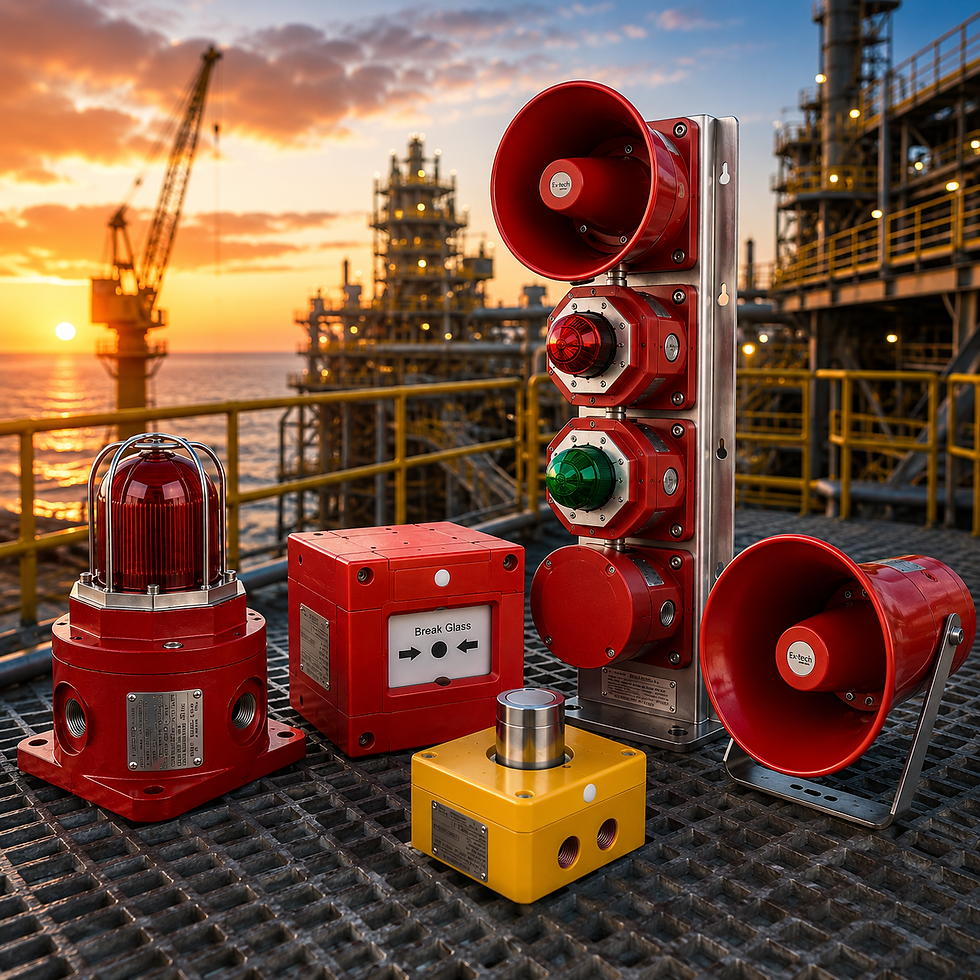
In a refinery, petrochemical plant or offshore facility, an alarm has to do more than simply make a sound. Personnel may be working around heavy machinery, process equipment and hazardous substances where a warning must be immediately noticeable and suitable for the environment.
This is where explosion-proof signalling equipment becomes an important part of an industrial safety system.
Through Sahmul Masar, industries in Saudi Arabia can access Ex-tech Signalling equipment covering explosion-proof beacons, sounders, sounder-beacon combinations, manual call points, push buttons and status indicators. These products are intended for demanding applications where dependable audible and visual notification is required.
When an Industrial Alarm Needs to Work in a Hazardous Area
Standard electrical signalling devices are not automatically appropriate for locations containing potentially explosive gases, vapors or dust.
Hazardous-area equipment is selected according to the characteristics of the installation. Depending on the application, engineers may need to consider:
Hazardous-area classification
Gas or dust group
Temperature classification
Equipment certification
Ambient temperature
Corrosion and weather exposure
Electrical supply
Required alarm output
Installation and maintenance requirements
The signalling device therefore becomes part of the overall hazardous-area engineering strategy rather than simply being another electrical accessory.
A Combination of Sound and Light Can Improve Alarm Awareness
Industrial environments can be noisy enough that an audible alarm may not always be immediately recognized. Conversely, a visual beacon may not be visible to personnel working behind equipment or inside another section of a facility.
Combining both notification methods can provide a more comprehensive warning.
The Ex-tech SB150 explosion-proof sounder and beacon combination brings audible and visual signalling together in a single unit. The Sahmul Masar listing identifies the product as ATEX and IECEx certified, with SIL2 compliance and configurations intended for specified hazardous gas and dust environments.
This type of combined device can be considered for locations where both acoustic and visual notification are required.
Product Options for Different Safety Requirements
Ex-tech Signalling's portfolio is not limited to one type of alarm device. Different industrial situations call for different forms of notification and manual control.
Visual Warning
Explosion-proof beacons and status lights provide visual indication of alarms, equipment conditions or operational states.
The BC125 Explosion Proof Beacon Status Light is one of the products included in the range.
Audible Warning
Explosion-proof sounders and horns provide audible notification in industrial environments.
The SD150 Explosion Proof Sounder Horn is designed for hazardous-area applications where high-output audible warning is required.
Combined Notification
Where a project requires both sound and light, the SB150 Explosion Proof Sounder & Beacon Combination provides both functions within one explosion-proof assembly.
Manual Alarm Activation
Not every emergency signal originates automatically from a detection system. Personnel may need to manually initiate an alarm.
The CP135 Explosion Proof Manual Call Point provides a break-glass manual activation arrangement, while the PB135 Explosion Proof Manual Push Button provides another hazardous-area manual control option.
Status Indication
For equipment and process monitoring, visual status indicators can communicate operating conditions without requiring an audible alarm.
The SL125 Explosion Proof Status Light Combination is part of the Ex-tech product range.
Where These Systems Fit into Industrial Facilities
Explosion-proof signalling is relevant wherever hazardous-area requirements overlap with the need for rapid notification.
Typical applications include:
Oil & Gas Refineries, terminals, processing facilities and other petroleum-related installations can require certified signalling equipment in classified areas.
Petrochemical & Chemical Plants Processing operations involving flammable substances can require appropriately certified audible and visual warning devices.
Offshore & Marine Facilities Offshore platforms, marine installations and ship-related environments can expose equipment to moisture, salt and other demanding conditions.
Hydrogen Facilities Hydrogen production, storage and associated infrastructure require careful consideration of hazardous-area equipment.
Manufacturing Certain manufacturing processes can involve combustible gases, vapors or dust and therefore require specialized signalling solutions.
Fire & Gas Systems Explosion-proof beacons and sounders can serve as field notification devices within larger fire-and-gas architectures.
Materials Matter in Harsh Industrial Locations
A hazardous-area signalling device may be exposed to considerably more than an explosive atmosphere.
Depending on the installation, equipment can encounter:
Salt spray
Humidity
Chemical exposure
Dust
Mechanical impact
Vibration
Outdoor weather
Temperature extremes
Ex-tech products include construction options such as GRP and stainless steel, depending on the model. The appropriate material should be determined from the actual environmental and project requirements.
For coastal and offshore applications, for example, corrosion resistance can be an important selection criterion. In chemical environments, compatibility with the surrounding atmosphere and process conditions may be equally important.
Certification Should Be Checked at Product Level
One of the most important points when specifying explosion-proof equipment is that certification should be verified for the exact model and configuration being purchased.
The Ex-tech range includes products carrying hazardous-area certifications such as ATEX and IECEx, while applicable products also provide SIL-related compliance.
Project engineers should verify the relevant certification documentation against the intended installation, including:
Zone classification
Gas/dust classification
Temperature class
Equipment protection level
Certification scope
Electrical characteristics
Environmental conditions
This prevents a common specification error: assuming that certification for one product automatically applies to every product in a manufacturer's range.
Saudi Arabia's Industrial Market Creates Diverse Signalling Requirements
The requirements of an oil-processing facility are not necessarily the same as those of a manufacturing plant, offshore installation or major infrastructure project.
Jubail
Jubail's extensive petrochemical and industrial infrastructure creates significant demand for hazardous-area electrical and signalling equipment. Explosion-proof sounders and beacons can be specified for appropriate classified areas within industrial facilities.
Dammam
Industrial, energy, logistics and manufacturing activities around Dammam can require robust warning and notification equipment for both indoor and outdoor installations.
Riyadh
Large industrial, infrastructure and utility projects in Riyadh may require specialized signalling equipment depending on the processes and hazardous-area classifications involved.
Jeddah
Jeddah's combination of industrial, logistics and marine activity creates applications where environmental durability and hazardous-area suitability may both be important.
Tabuk and Neom
Major development and infrastructure projects in the northwest of Saudi Arabia can involve new industrial, energy and utility installations. Equipment selection should follow the technical specifications established for each individual project.
Building a More Complete Industrial Warning System
An explosion-proof beacon or sounder is rarely considered in isolation on a major industrial project.
It may operate alongside:
Detection → Control → Notification → Response
For example, a gas detector may identify a hazardous condition. A control system can process the signal, while an explosion-proof sounder and beacon provide field notification. Depending on the facility design, the alarm may also initiate emergency shutdown procedures or other predefined responses.
The signalling equipment therefore forms one component of a broader safety architecture.
Why LED Beacons Are Increasingly Used
LED technology has become common in industrial visual signalling because it can provide bright, clearly identifiable illumination while supporting long operating life.
For hazardous-area applications, however, the LED itself is only one part of the specification. The complete enclosure, optical system, electrical design, certification and environmental protection must be considered.
A bright beacon is useful only when the complete product is appropriate for the location in which it will be installed.
Choosing the Right Ex-tech Device
For a new project or replacement installation, the selection process can be approached in a straightforward order:
First — identify the environment. Determine whether the installation involves gas, vapor, dust, offshore exposure, chemicals or other hazards.
Second — establish the hazardous-area requirements. Confirm the zone, classification and applicable protection requirements.
Third — determine the notification method. Decide whether the application requires visual indication, audible warning, manual activation, status indication or a combination.
Fourth — check the certification. Review the documentation for the exact product and configuration.
Finally — confirm integration. Make sure the selected device is compatible with the facility's electrical supply, alarm system and installation requirements.
Ex-tech Signalling Solutions for Saudi Industrial Projects
Sahmul Masar provides access to Ex-tech Signalling products for industrial applications across Saudi Arabia, including Riyadh, Dammam, Jubail, Jeddah, Tabuk and NEOM.
The range is suited to projects where audible and visual notification must operate in demanding environments, including oil and gas, petrochemical, chemical, marine, offshore, hydrogen, manufacturing and fire-and-gas applications.
The available product categories include:
Explosion-proof beacons
Explosion-proof sounders
Sounder-beacon combinations
Manual call points
Explosion-proof push buttons
Status lights
Final Consideration
Industrial signalling is ultimately about getting the right warning to the right people at the right time — and doing so with equipment appropriate for the environment.
For hazardous-area installations in Saudi Arabia, Ex-tech explosion-proof signalling equipment provides options for audible alarms, visual beacons, combined notification and manual alarm activation.
Before specifying any device, the project should be evaluated for its hazardous-area classification, environmental conditions, certification requirements and system architecture.
For industrial projects in Riyadh, Dammam, Jubail, Jeddah, Tabuk, Neom and other Saudi locations, Sahmul Masar can provide access to the Ex-tech Signalling range for project-specific requirements.
Comments